Why Your Roof Only Leaks During Heavy Rain
Explore why roof leaks happen only during heavy rain and learn how to prevent severe damage with insights from Zenith Roofing experts.
(Zenith Roofing — Serving Marietta, Roswell, Alpharetta & Milton)
If your roof only leaks during heavy rain, you’re dealing with one of the most common and misunderstood roofing issues. Homeowners often assume that if a leak only appears during severe storms, it isn’t serious. The truth is the opposite:
A leak that only shows up during heavy rain is usually a sign that something in the roof system has already failed — but only becomes obvious when water volume and wind pressure increase.
Here’s a clear breakdown of why this happens and what it really means for your home.
Heavy Rain Exposes Weak Points a Light Rain Never Will
A properly functioning roof should not leak under any amount of rainfall.
When leaks only show up during heavy downpours, it usually means:
Water is finding small gaps that don’t get overwhelmed in light rain
Wind-driven rain is being forced sideways or upward
The system has a minor failure that only appears under pressure
A drainage or flashing issue worsens when large amounts of water are present
Light rain won’t always reveal these problems — but heavy rain will.
The Most Common Reasons Roofs Leak Only During Heavy Rain
1. Wind-Driven Rain Working Under Shingles
During storms, wind pushes rain sideways or even upward across the roof.
This can force water up under:
Lifted shingles
Broken shingle seals
Creased areas from previous windstorms
Poorly nailed shingles
North Georgia wind bursts — especially in Alpharetta, Milton, and Roswell — frequently create this issue.
2. Failing Flashing Around Chimneys, Walls, or Valleys
Flashing is designed to redirect water, but when flashing is loose, corroded, or improperly installed, it becomes one of the most common leak sources.
Flashing leaks often appear:
At the ceiling near walls
Behind chimneys
In roof valleys
Where shingles meet siding
In regular rain, the volume is manageable.
In heavy rain, water overruns the weak spot and migrates inside.
3. Cracked or Shrinking Pipe Boots and Zipper Boots
Plumbing vent boots are a frequent failure point, especially in older roofs.
Common problems:
The rubber collar splits
UV exposure causes cracking
Zipper boots weren’t installed correctly around electrical lines
The flashing loosens over time
During light rain, only a small amount of moisture hits the area.
During heavy rain, water overwhelms the cracked boot and follows the pipe directly into the attic.
4. Clogged Gutters and Overflowing Water
When gutters are clogged, water pools and backs up under the shingles.
Heavy rain creates:
Gutter overflow
Water intrusion under the drip edge
Saturation at the fascia and soffit
Leaks that appear on exterior walls or ceilings near the eaves
Marietta and Roswell homes with heavy tree coverage see this problem constantly.
5. Improper Roof Pitch or Design Flaws
Some roof shapes naturally trap water or move water too slowly.
Examples:
Low slopes with architectural shingles (not rated for low pitch)
Dead valleys
Roof-to-wall transitions without proper kickout flashing
Wide dormer returns that push water sideways
Light rain drains.
Heavy rain overflows and leaks inside.
6. Old, Brittle, or Granule-Depleted Shingles
As shingles age, they lose:
Flexibility
Protective granules
Water-shedding ability
When the asphalt surface becomes exposed, the roof absorbs water instead of shedding it.
During regular rain, the absorption may not exceed the threshold needed to create a leak.
During heavy rain, the roof becomes overwhelmed.
7. Attic Condensation Mistaken for a Leak
This is one many homeowners never consider.
During prolonged rainstorms, especially in cold-to-warm weather swings, condensation can form on cold roof decking.
This looks exactly like a roof leak but only happens:
After long periods of rain
When temperature swings are extreme
When ventilation is poor
Homes with blocked soffits or undersized ridge vents are especially vulnerable.
Why This Happens So Often in North Georgia
North Georgia’s microclimate makes these leaks more common than in many other states.
Our region experiences:
Rapid temperature swings
High humidity
Frequent wind bursts
Heavy tree coverage
Storm clusters with sideways rain
Older neighborhoods with aging flashings and decking
Roofs here are exposed to conditions that push every weak spot to the limit.
When You Should Be Concerned
A roof that leaks during heavy rain is not “fine the rest of the time.”
It is already failing — the volume of water is simply the trigger.
You should schedule an inspection if:
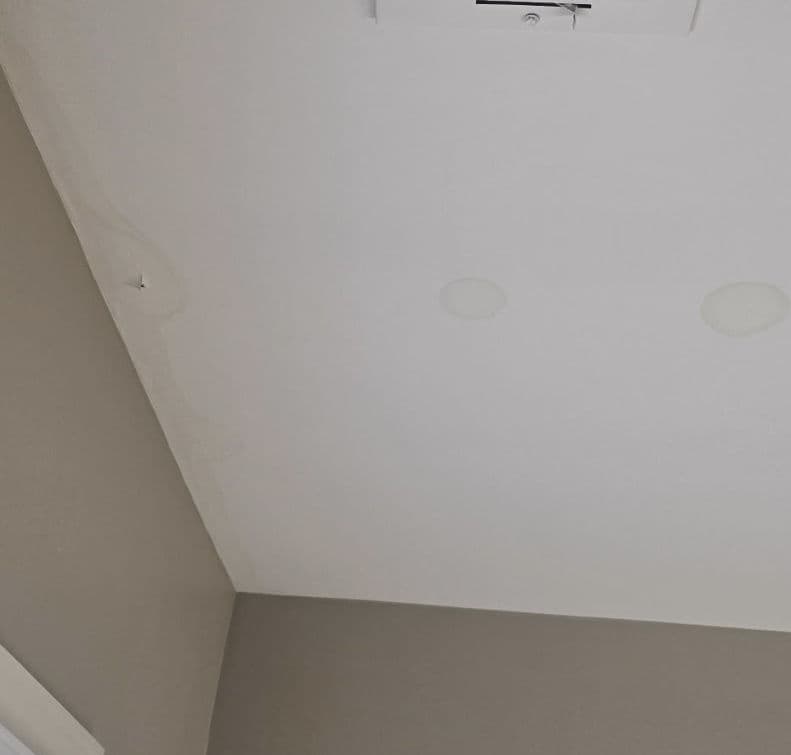
Water stains appear during storms
You hear dripping in the attic
Leaks occur only with sideways/wind-driven rain
You see granules after storms
Interior paint bubbles during heavy rain
Your roof is over 12–15 years old
These are all signs of underlying damage.
What Zenith Roofing Looks For During an Inspection
Our inspections focus on identifying hidden failures, including:
Wind-lifted shingles
Failed seals
Cracked pipe boots
Zipper boots incorrectly installed near power lines
Damaged flashing
Saturated decking
Gutter overflow points
Storm-related bruising
Ventilation problems
We document everything with photos and provide clear next steps.
Protect Your Home Before the Next Storm
A roof leak that only shows up during heavy rain is your roof telling you something is wrong.
The sooner it’s inspected, the easier it is to prevent bigger problems.
Zenith Roofing offers free, detailed inspections throughout Marietta, Roswell, Alpharetta & Milton, along with honest recommendations based on actual conditions.
If you’d like us to take a look, just reach out — we’re here to help keep your home protected year-round.