The Parts of Your Roof You Never See — And Why They Matter
Explore the concealed parts of your roof that affect its longevity and performance. Learn about underlayment, flashing, and more to protect your home.
The Parts of Your Roof You Never See — And Why They Matter
(From Zenith Roofing — Proudly Serving Atlanta, Alpharetta, Sandy Springs, Duluth, Cumming, Roswell, Johns Creek, Lawrenceville, Buford, Suwanee, Dawsonville, Gainesville, Canton, Sugar Hill, Oakwood, Marietta, Kennesaw, Woodstock, Norcross, Madison, Greensboro, Athens, Statham, Jefferson, Newnan, Peachtree City, Fayetteville & surrounding North Georgia communities)
Most homeowners judge their roof by what they can see from the street: the color, the shingles, whether anything looks obviously damaged. But the most important and most vulnerable parts of a roof are the components you never see — the hidden layers beneath the surface that determine whether your roof lasts 5 years, 15 years, or the full lifespan it was designed for.
These unseen elements protect your home from water intrusion, humidity, heat, and wind — all common challenges in the Georgia climate. If any one of these underlying components fails or was not installed correctly, your roof’s performance and lifespan suffer dramatically. Below is a factual, detailed breakdown of these elements and why they matter.
1. Roof Decking (Structural Foundation)
The decking is the base layer that all roofing materials attach to. It’s usually plywood or oriented strand board (OSB). If this layer becomes warped, soft, cracked, or water-damaged, the entire roof system is compromised.
In humid climates like ours, moisture can travel through the attic if ventilation is poor, weakening the decking from above and below. That’s why inspections always include attic-side decking evaluation — not just what’s visible from the outside.
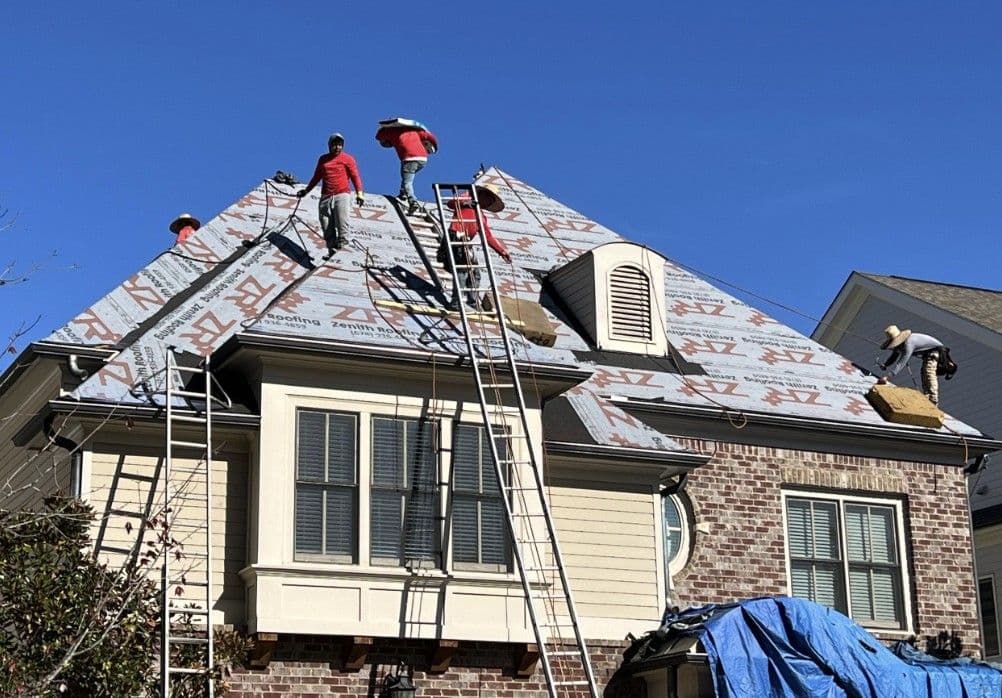
2. Underlayment (Water Barrier Beneath Shingles)
Underlayment is the secondary waterproof layer under the shingles. There are two main types:
Felt underlayment: older style, less water-resistant
Synthetic underlayment: modern standard, stronger and more water-resistant
In areas prone to sudden heavy rains — common throughout Atlanta, Roswell, Johns Creek, and Marietta — high-quality synthetic underlayment is essential. It protects the decking from water that penetrates the shingles during storms.
3. Ice and Water Shield (Critical Leak Protection)
This peel-and-stick membrane is used at roof edges, roof valleys, chimneys, and penetrations where water is most likely to pool. Without it, even small amounts of rain can back up under shingles and eventually reach the decking.
In Georgia, heavy rainfall events frequently expose roofs that lack adequate ice and water shield, leading to leaks that aren’t easily traced back to a specific spot on the surface.
4. Flashing Systems (Water Diversion at Transitions)
Flashings are metal pieces installed where different planes of the roof meet — such as:
Chimneys
Dormers
Valley intersections
Roof-to-wall transitions
Flashings redirect water away from vulnerable junctions. Poor flashing installation or corrosion over time accounts for a large percentage of leak issues we inspect, especially after storms.
5. Drip Edge (Edge Protection)
A metal strip (drip edge) along the eaves and rakes directs water into the gutters and prevents it from getting behind the roofing materials. Without proper drip edge, moisture can rot the fascia and soffit and undermine the first few rows of shingles.
6. Pipe Boots and Penetration Seals
Every plumbing vent, roof vent, or pipe that penetrates the roof must be sealed properly. Pipe boots protect these points from water intrusion. Over time, rubber boots can crack, shrink, or separate from the pipe.
For homes with power or cable lines near vents, zipper boots are sometimes used. These must be installed correctly, or they leak just as easily as a standard boot that’s failed.
7. Intake and Exhaust Ventilation
Ventilation draws cool air into the attic (intake), and allows hot, moist air to escape (exhaust). Proper airflow reduces attic heat, prevents moisture buildup, and slows shingle deterioration.
Common intake sources include soffit vents. Exhaust vents might be ridge vents or box vents. When intake and exhaust are out of balance, heat and humidity get trapped, accelerating aging of the roof decking and shingles.
8. The Nail System (Fastening Quality Matters)
Shingles are only as good as how they’re fastened. Issues like:
Over-driven nails
Under-driven nails
Misplaced nails
Incorrect nail length
can all shorten roof life or create points of water entry.
9. Starter Shingles (Edge Protection Against Wind Uplift)
Starter shingles are installed on the roof edges before the first course of field shingles. They allow the first row to seal properly and prevent wind uplift. Skipping this step is common with lower-quality installations and often leads to early edge failure.
10. Ridge Cap Shingles (Top Seal and Protection)
The ridge cap covers the exposed seam at the roof peak. These shingles are specially designed to be durable and flexible. Improper ridge cap installation can allow water or wind to infiltrate the top of the roof structure.
Why Hidden Components Matter for North Georgia
The weather patterns and microclimate in North Georgia — including heat, humidity, thunderstorms, and seasonal temperature swings — put extra stress on roofing systems. Problems in the hidden layers often show up as surface issues only after damage has progressed.
A visible shingle issue may be just a symptom; the real cause may lie deep in the roof buildup.
When You Should Get a Professional Inspection
If your roof is:
Older than 10–12 years
Showing surface signs (lifting shingles, discoloration)
Exposed to recent storms
Experiencing moisture issues in the attic
…then a professional inspection is warranted. Zenith Roofing evaluates all hidden components, documents the condition with photos, and explains what’s working and what’s not.
We offer detailed roof inspections throughout Atlanta, Alpharetta, Sandy Springs, Duluth, Cumming, Roswell, Johns Creek, Lawrenceville, Buford, Suwanee, Dawsonville, Gainesville, Canton, Sugar Hill, Oakwood, Marietta, Kennesaw, Woodstock, Norcross, Madison, Greensboro, Athens, Statham, Jefferson, Newnan, Peachtree City, Fayetteville and surrounding communities.