Why Granules in Your Gutters Are a Major Warning Sign - Zenith Roofing
Granules in your gutters are a serious warning sign of roof aging or damage. Learn why this happens, its impact, and how to address it with Zenith Roofing.
(Zenith Roofing — Serving Marietta, Roswell, Alpharetta & Milton)
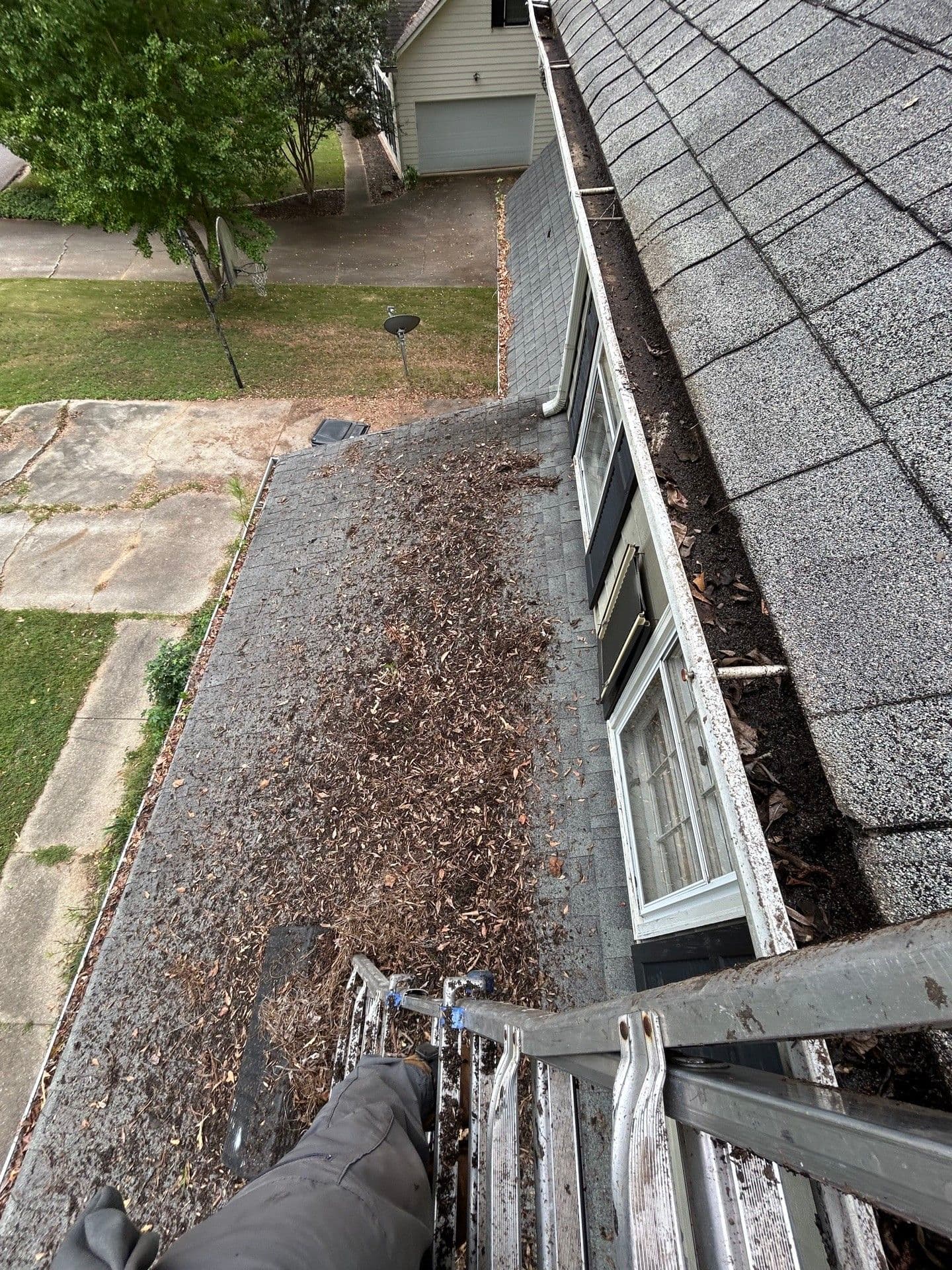
When you clean your gutters and notice dark, coarse, sand-like material collecting at the bottom, those aren’t dirt or roof scraps—it’s the protective granules from your shingles. A light amount of granule shedding over time is normal. But when you start seeing piles, a layer of grit along the gutter floor, or heavy granule buildup at the downspouts, that is one of the biggest warning signs that your roof is aging or has been damaged.
This is especially important for homeowners in North Georgia, where our climate causes shingles to deteriorate faster than in many other parts of the country. Below is a clear, factual breakdown of what granules do, why they end up in the gutters, and when it becomes a serious problem.

What Granules Actually Do
Shingles are built in layers, and the granule layer is essential. Those granules:
Protect the asphalt from UV radiation
Add impact resistance
Reduce heat absorption
Help maintain the shingle’s fire rating
Provide the color and texture you see from the street
Once this granule layer starts shedding excessively, the asphalt underneath becomes exposed. Exposed asphalt dries out, cracks, and curls much faster.
Manufacturers like IKO, GAF, and Owens Corning openly state that once the asphalt layer is visible, the shingle’s lifespan drops sharply.
Why Heavy Granule Loss Happens
1. Natural Aging (Accelerated by North Georgia’s Microclimate)
Shingles wear down over time, but in North Georgia, that process happens faster because of:
High humidity
Rapid temperature swings (30–40° in a single day)
Heavy tree coverage that traps moisture
Intense summer heat amplified by Atlanta’s heat-island effect
Frequent storm activity
A roof that might last 20–25 years in the Midwest often lasts 12–16 years here. Granule loss is usually the first visible sign that a roof is nearing the end of its service life.
2. Storm Damage (Hail and Wind)
Hail doesn’t have to be large to remove granules. Even small hailstones can bruise or fracture the granule layer.
Signs that hail or wind caused the granule loss:
Circular or “scuffed” spots on shingles
Soft bruises that feel spongy when pressed
Granules accumulating after a storm
Loss concentrated on one side of the roof
Hail damage that removes granules exposes the asphalt and significantly shortens the roof’s life.
3. Poor Attic Ventilation
Manufacturers warn that poor attic ventilation is one of the top causes of premature shingle failure.
When heat builds up in the attic, shingles are heated from underneath, causing:
Asphalt softening
Granules detaching
Early cracking
Shortened lifespan
Attic heat in this region regularly exceeds 140–160°F in the summer.
4. Tree Coverage and Constant Moisture
Areas like East Cobb, Roswell, and Milton have dense tree coverage.
Shade keeps shingles wet longer, and that trapped moisture leads to:
Algae growth
Faster granule shedding
Weakening of the bond between granules and asphalt
North-facing slopes in shaded neighborhoods almost always show wear first.
5. Improper Installation or Cheap Materials
Incorrect nailing patterns, over-driven nails, under-driven nails, or low-grade shingles all accelerate granule loss. Poor installation can shorten a 25-year roof to 10–12 years.
How Much Granule Loss Is Normal?
Normal:
A light sprinkling spread over the course of a year, especially on a brand-new roof (factory excess).
Not normal:
Granules forming visible piles
Heavy granule concentration after storms
Downspouts pushing out dark, sandy debris
Enough granules to coat your hand
Bald spots visible on shingles
If you can scoop granules, it’s a sign of roof deterioration.
Why Ignoring Granule Loss Leads to Bigger Problems
Once asphalt is exposed, the roof ages much faster. This leads to:
Brittleness and cracking
Curling shingles
Water intrusion
Decking rot
Mold in the attic
Ceiling staining
Shortened roof lifespan
Shingles cannot be re-granulated. Once significant granule loss occurs, those shingles must be replaced.
What To Do If You See Granules in Your Gutters
A smart approach is:
Take a photo of the granules.
Note if a storm recently happened.
Do not climb onto the roof.
Schedule a professional inspection.
During an inspection, we check for:
Hail bruising
Wind uplift
Age-related wear
Ventilation issues
Moisture damage
Failing flashing or boots
You’ll receive clear photos, explanations, and honest recommendations about your roof’s remaining lifespan.
Need an Expert Opinion?
Granule loss is one of the earliest signs that a roof is reaching the end of its useful life or has sustained storm damage. Catching it early can prevent costly repairs down the road.
Zenith Roofing provides free inspections throughout Marietta, Roswell, Alpharetta, and Milton, along with detailed documentation and straightforward guidance.
To schedule your inspection, just reach out — we’re here to help.