Why Attic Ventilation Can Add or Remove 10 Years From Your Roof
Learn why proper attic ventilation is crucial for extending the life of your roof by up to 10 years. Protect your home from common roofing issues.
(Zenith Roofing — Serving Marietta, Roswell, Alpharetta & Milton)
Attic ventilation is one of the most overlooked parts of a roofing system, yet it has more impact on your roof’s lifespan than almost anything else. Poor ventilation can shorten a roof’s life by 5–10 years, void manufacturer warranties, and create problems that look like leaks, storm damage, or shingle defects.
Homes in North Georgia are especially vulnerable because of our humidity, rapid temperature swings, and heavy tree coverage. If ventilation isn’t designed correctly, heat and moisture get trapped in the attic — and the roof deteriorates from the inside out.
Here’s a clear, factual explanation of how attic ventilation works, why it matters, and the different vent options available.
What Roof Ventilation Actually Does
Proper attic ventilation balances two things:
Intake air (cool, dry air entering the attic — usually at the soffits)
Exhaust air (hot, moist air leaving the attic — usually at the ridge or through vents)
When intake and exhaust are balanced, the attic stays closer to outdoor temperature, allowing the roof system to operate the way manufacturers intend.
When ventilation is not balanced, the roof ages significantly faster.
How Poor Ventilation Damages Roofs
1. Excessive Heat Buildup “Bakes” the Shingles
In summer, attics can reach 140–160°F in North Georgia.
This heat transfers into the shingles, causing:
Premature granule loss
Brittle shingles
Cracking and curling
Shortened lifespan
Seal strip failure
Nail pops
Manufacturers like IKO, GAF, and CertainTeed all specify that improper ventilation voids warranties because it causes accelerated shingle aging.
2. Moisture Becomes Trapped in the Attic
North Georgia humidity is a major issue. Without proper exhaust, moisture from:
Indoor air
Showers
Laundry
Seasonal temperature swings
gets trapped in the attic.
This leads to:
Mold and mildew
Wet or darkened decking
Rusted nails
Insulation failure
Wood rot
Many homeowners mistake moisture damage for a leak — when the real problem is ventilation.
3. Ice Damming in Winter
While less common than in northern states, North Georgia does get occasional cold snaps.
Poor ventilation causes:
Warm attic air to melt snow on the roof
Melted snow refreezes at the eaves
Ice dams that push water under shingles
Again, this isn’t a shingle or flashing failure — it’s a ventilation issue.
4. Higher Energy Bills
Hot attics force HVAC systems to work harder.
Proper ventilation reduces attic heat, which lowers:
Cooling costs in summer
Moisture load in winter
Many homeowners see a noticeable drop in energy bills after ventilation corrections.
The Different Types of Roof Vents (And What They Actually Do)
This is where most homeowners — and even many contractors — get confused. Not all vents serve the same purpose, and not all vents work well together.
Below is a factual breakdown of the most common attic vent options.
1. Ridge Vents (Exhaust)
Best exhaust option for most shingle roofs.
Ridge vents run along the roof peak and allow hot air to escape naturally. They work best when paired with adequate soffit intake.
Pros:
Most efficient passive exhaust system
Even ventilation along the entire ridge
Low profile, blends into the roof
No moving parts
Cons:
Useless without soffit intake
Doesn’t work on very low-slope roofs
2. Soffit Vents (Intake)
Absolutely essential.
Without intake, exhaust vents can’t work properly.
Types:
Continuous soffit vents
Rectangular / individual vents
Hidden vented soffit (in newer homes)
Purpose:
Bring in cool, dry air at the lowest point of the attic.
Signs of poor intake:
Hot attic
Mold near roof edges
Frost in attic during cold snaps
Ridge vent performing poorly
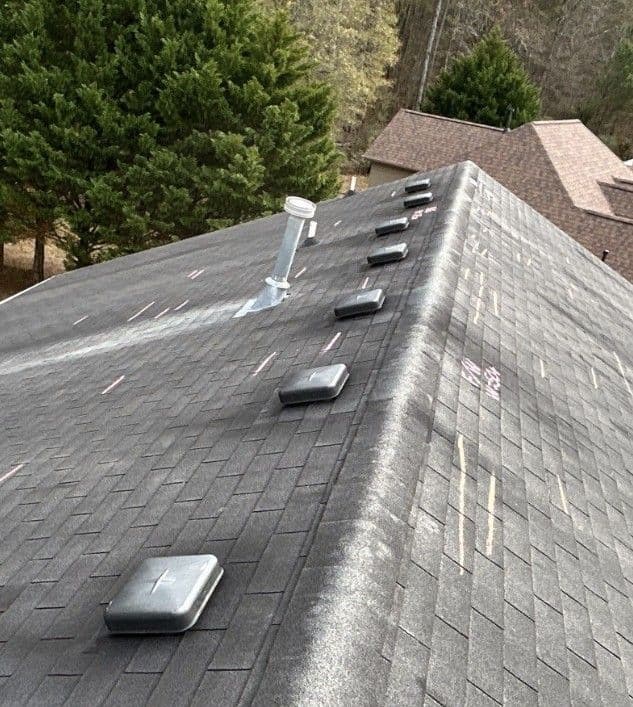
3. Box Vents (Static Vents / Turtle Vents)
Exhaust vents used when ridge vents aren’t feasible.
They rely on natural convection to release hot air.
Pros:
Easy to install
Common on older homes
Decent performance when enough are installed
Cons:
Ventilate only the area around each vent
Require proper spacing
Not as effective as ridge vents
4. Off-Ridge Vents (Louvered Vents)
A variation of box vents, installed just below the ridge.
Pros:
Better airflow than standard box vents
Good for hip roofs where ridge length is limited
Cons:
Still less effective than a ridge vent
5. Powered Attic Fans (Electric or Solar)
Fans actively pull air out of the attic.
Pros:
Strong airflow
Helpful in homes with limited soffit intake
Cons:
Can depressurize the attic and pull conditioned air from the home
Must be balanced carefully
Not a substitute for proper passive ventilation
When used, they should only supplement — not replace — passive ventilation.
6. Gable Vents
Located on the sidewalls of gables.
Pros:
Provide cross ventilation in older homes
Simple installation
Cons:
Can disrupt ridge/soffit airflow
Ventilate unevenly
Allow wind-driven rain if not properly angled
Gable vents should not be used alongside ridge vents unless specifically engineered.
7. Turbine Vents (Whirlybirds)
Wind-driven exhaust vents.
Pros:
Move more air than box vents
No electricity needed
Cons:
Only work when wind is present
Bearings wear out
Vulnerable to leaks if not flashed correctly
Not common in modern residential roofing but still seen on older homes.
The Most Common Ventilation Problems We See in North Georgia
Ridge vents installed with no soffit intake
Painted-over or blocked soffits
Gable vents conflicting with ridge vents
Undersized exhaust for attic square footage
Older homes with box vents spaced incorrectly
Hot attics causing excessive granule loss
Moisture-related decking rot
Mold around roof edges
HVAC duct leakage adding humidity
Fans pulling conditioned air from the home
Most homeowners never see these issues until the roof is already showing signs of failure.
How Proper Ventilation Extends Roof Life
When the attic has balanced airflow:
Shingles stay cooler
Asphalt remains flexible longer
Granule loss slows
Flashing systems last longer
Decking stays dry
Mold risk drops
Energy efficiency improves
This can add 5–10 additional years to your roof’s service life.
What To Do If You’re Not Sure Your Attic Is Ventilated Correctly
If your home has:
A hot upstairs
Granules in the gutters
Darkened decking
Moldy or musty smells
Curling shingles
High energy bills
A roof older than 12–15 years
…it’s time for a ventilation inspection.
Zenith Roofing provides free, detailed evaluations that include:
Attic temperature checks
Inspection of soffits and ridge vents
Moisture assessment
Roof system analysis
Photo documentation
Honest recommendations
We serve homeowners in Marietta, Roswell, Alpharetta, Milton, Gwinnett and Northeast Georgia with thorough, educational inspections designed to protect your home for the long term.
If you'd like us to take a look, just reach out.