Roof Code Compliance in Atlanta | Why Roofing Details Matter
Discover why paying attention to roofing code compliance in Metro Atlanta is crucial. Explore how details like flashing and ventilation affect roof durability.
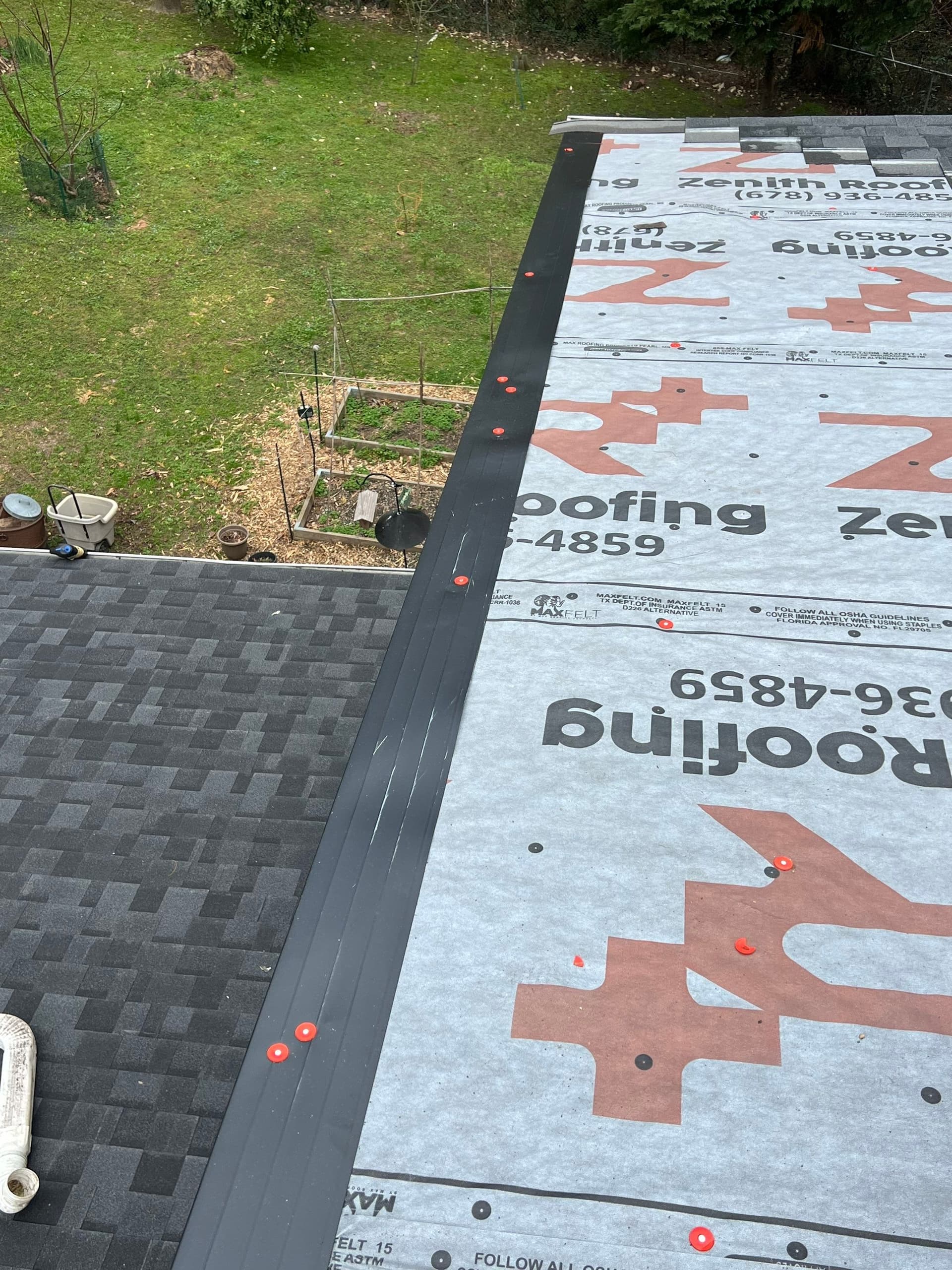
Roof Code Compliance in Metro Atlanta: Why the Small Details Matter
When homeowners search for a roofing contractor in Metro Atlanta, most of the focus goes to the obvious choices—shingle color, warranty, and price. But the truth is this:
A roof doesn’t fail because the shingles “looked wrong.”
Roofs fail because the small, hidden details weren’t done to code—and weren’t done with care.
At Zenith Roofing, we’ve seen it over and over: the difference between a roof that lasts and a roof that leaks usually comes down to what you can’t see from the street—decking condition, flashing, underlayment, fasteners, ventilation, and transitions. These are the areas where code compliance matters most, and where rushed crews tend to cut corners.
If you’re planning a roof replacement or roof repair in Dunwoody, GA (or anywhere in North Metro Atlanta), here’s what code compliance really means—and why the “little” details make the biggest difference.
What “Code Compliant Roofing” Actually Means
Roofing codes exist for one reason: protecting the home. They set minimum standards for:
Structural integrity (your roof deck must be solid)
Water protection (proper underlayment, flashing, and drainage)
Wind resistance (correct fasteners and installation methods)
Fire rating and material requirements
Ventilation standards to reduce heat and moisture buildup
Just as important: most manufacturers require installation to code and to their specifications for warranties to remain valid.
Bottom line: A roof can look great on day one and still be a problem roof if the details under the surface weren’t installed correctly.
The “Small Details” That Separate a Great Roof From a Problem Roof
Below are the core areas where we see the biggest difference in roof performance—especially in Georgia where storms, wind, and heavy rain can expose weak points fast.
1) Decking Matters: You Can’t Install a Strong Roof Over a Weak Foundation
Your shingles, nails, and underlayment are only as reliable as what they’re attached to.
During a tear-off, we inspect the roof decking for:
Rot or moisture damage
Soft spots and delamination
Improper thickness or previous patchwork
Areas compromised around valleys, chimneys, and penetrations
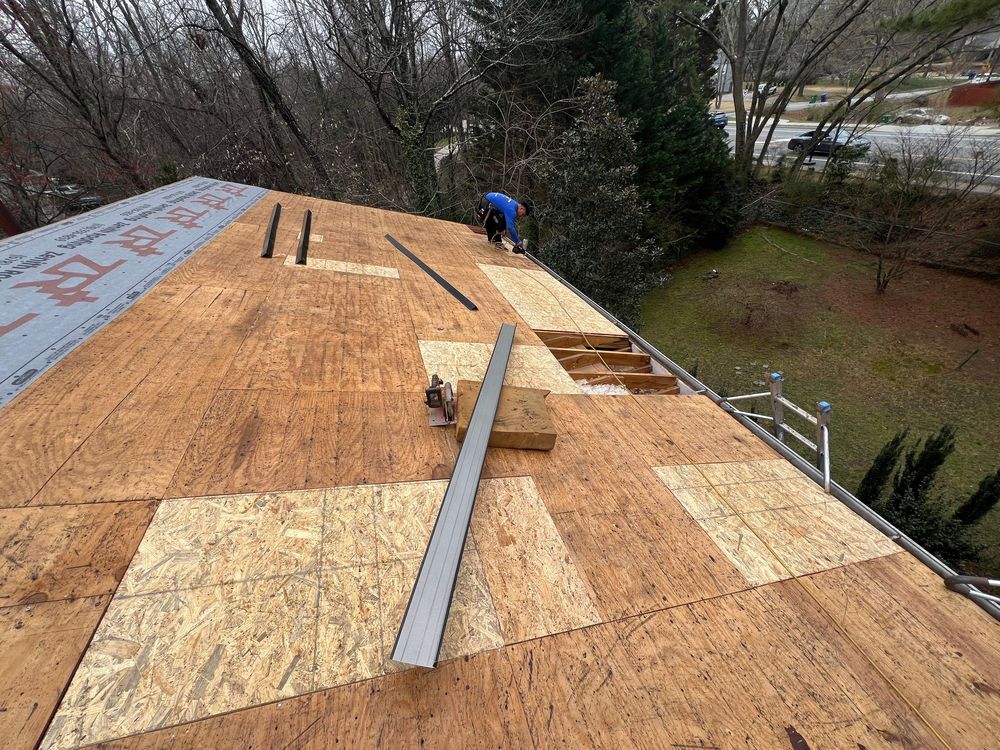
If the decking isn’t solid, it must be repaired or replaced before the roofing system goes on. This isn’t “optional” if you want a roof that performs correctly and passes inspection.
Why it matters:
Bad decking causes nail pops, uneven shingle lines, wind vulnerability, and leaks that show up months later—right when a homeowner thinks the job is “done.”
Caption idea for your jobsite photo:
“Decking repairs are a critical part of code-compliant roof replacement—no shortcuts.”
2) Underlayment and Waterproofing: Where Dry Homes Are Made
Underlayment is one of the most underrated layers of a roofing system. It’s not “extra.” It’s part of a roof’s water management design.
A code-compliant approach means:
Using approved underlayment
Lapping seams correctly (so water sheds downward)
Sealing details at transitions and vulnerable zones
Protecting valleys, eaves, and penetrations properly
In real life, underlayment is what buys you protection when:
a storm hits mid-project
wind-driven rain gets under shingles
debris or ice backs water up into vulnerable areas
Why the details matter:
Incorrect overlaps, rushed fastening, or sloppy transitions can turn the underlayment into a pathway for water instead of a barrier.
Caption idea:
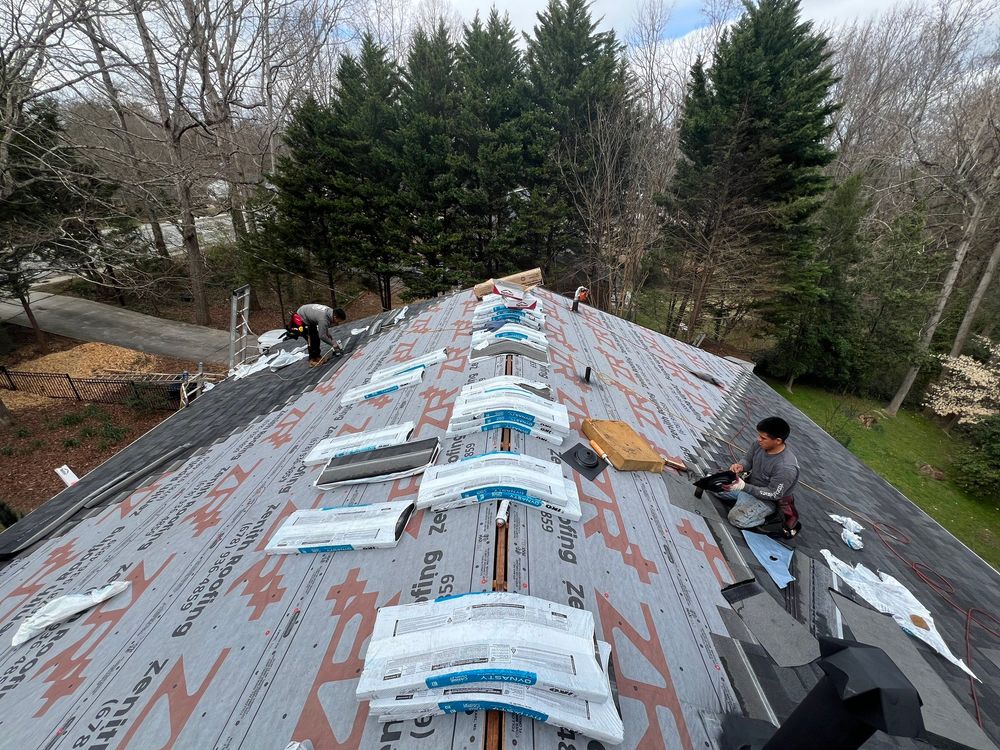
“Underlayment isn’t just a layer—it’s your roof’s backup defense against wind-driven rain.”
3) Flashing and Valleys: The #1 Leak Source When Done Wrong
If you want one area where “small details” absolutely make or break a roof, it’s flashing.
Most roof leaks happen at:
Valleys (where two roof planes meet)
Sidewalls
Chimneys
Skylights
Pipe penetrations
Step-down transitions and roof-to-wall intersections
Code compliance here looks like:
Correct flashing type and placement
Correct layering sequence (so water sheds properly)
Correct fastening (fasteners placed where they won’t become leak points)
Proper seal/closure strategy where needed
Valleys especially require precision. A valley is basically a “water highway” during a heavy Georgia rain. If it’s done right, it moves water off the roof fast. If it’s done wrong, it becomes the leak that won’t go away.
Why the details matter:
A roof can have premium shingles and still leak if a valley transition is rushed.
Caption idea:
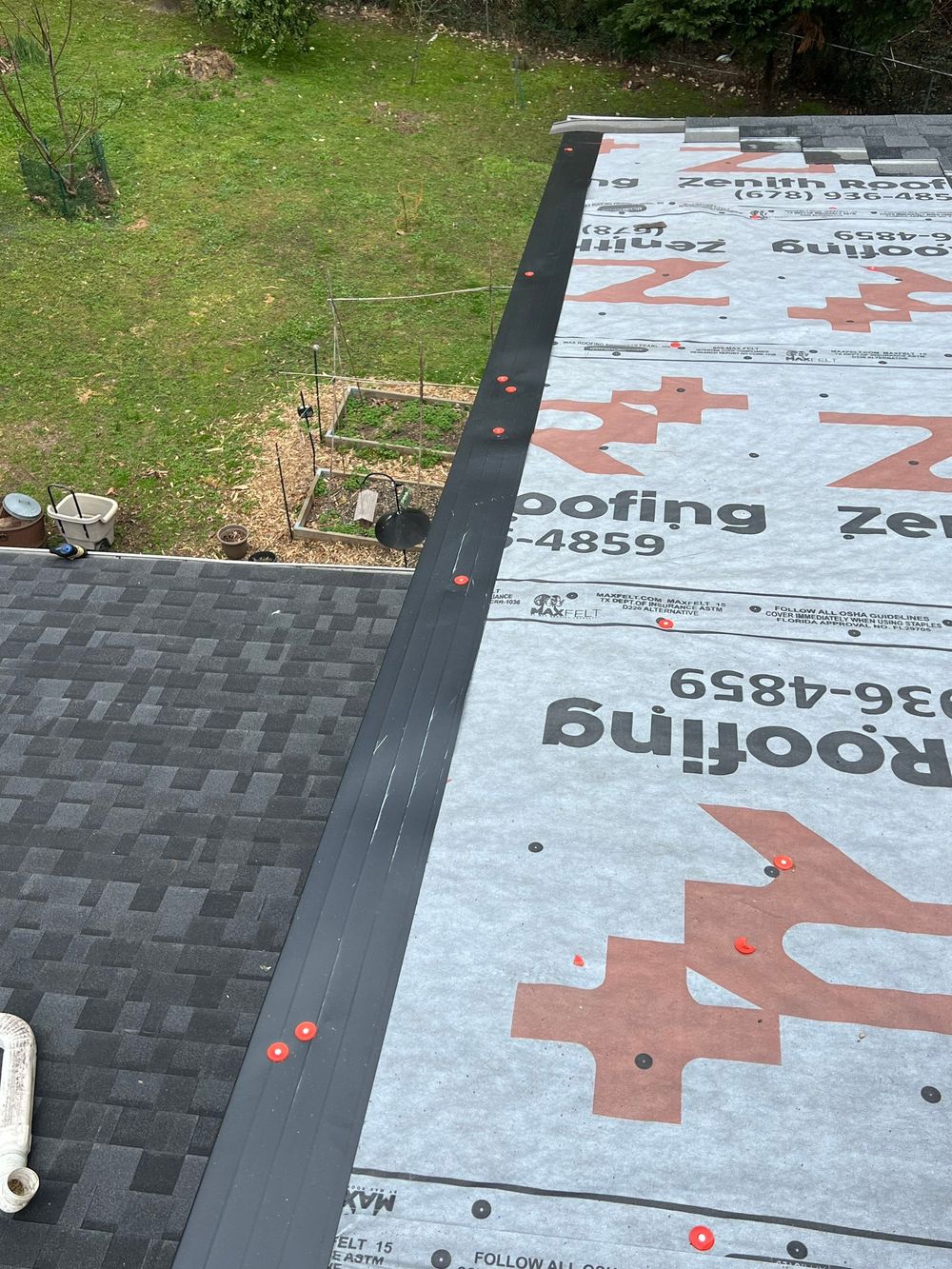
“Valley and edge details are where code compliance protects the home—this is not a place to cut corners.”
4) Fasteners and Nailing: Tiny Mistakes That Create Big Problems
Most homeowners never think about nails—but nail placement is a major performance factor.
A properly installed roof requires:
The correct fastener type
Correct fastener length (so it anchors properly into decking)
Proper nail placement on each shingle
Proper number of fasteners (can vary depending on conditions and manufacturer requirements)
Avoiding over-driven or angled fasteners (common shortcut that causes blow-offs and leaks)
Why it matters:
Improper nailing is one of the fastest ways to end up with:
wind damage
shingle blow-offs
manufacturer warranty issues
call-backs that could have been avoided
5) Ventilation: Code Compliance That Protects the Whole Roofing System
Ventilation is not just comfort—it’s roof system health.
Balanced intake and exhaust ventilation helps reduce:
heat buildup (which ages shingles faster)
moisture buildup (which can damage decking and insulation)
condensation problems in colder months
Why it matters:
A roof that’s under-ventilated can look fine initially, but it’s more likely to develop premature aging and moisture-related issues over time.
Why Code Compliance Protects Homeowners Long-Term
A roof replacement is a major investment. Code compliance protects that investment in ways homeowners don’t always realize right away:
Fewer leaks and repairs (especially around transitions and flashings)
Better storm performance in Georgia weather
Cleaner inspections and smoother permitting (when required)
Reduced risk of surprise decking problems after the job is “finished”
Better resale confidence (buyers and inspectors notice sloppy roofing details)
Better warranty protection (installation requirements matter)
If you’re comparing quotes, remember: two roofs can look similar from the ground while being completely different in the details that keep your home dry.
What Homeowners Should Ask Any Roofer (If You Want a Code-Compliant Install)
If you want to protect yourself, ask these questions before signing:
Will you inspect the decking after tear-off—and replace damaged sections if needed?
How do you handle valleys, walls, and chimney flashing? (Ask them to explain the layering.)
What underlayment system are you installing—and where are the high-risk areas protected?
How do you ensure the roof meets manufacturer installation requirements?
How do you address ventilation? (Balanced intake + exhaust is key.)
Will you document the process with photos? (Great contractors do.)
A quality roofer should be able to answer clearly—without getting defensive or vague.
Zenith Roofing’s Approach: Built to Code, Finished With Care
At Zenith Roofing, our goal is simple: build the roof the right way, not the fast way.
That means:
Honest inspections (and clear communication about what we find)
Addressing the decking and structural details before installing shingles
Focusing on the leak-prone areas: valleys, edges, penetrations, and flashings
Doing the small details the way they’re supposed to be done—because that’s what protects the home
If you’re in Dunwoody, GA or anywhere in North Metro Atlanta and you’re concerned about storm damage, aging shingles, or roof leaks, we’re happy to help.
📞 Call Zenith Roofing: 404-769-7805
Schedule a free roof inspection and get straightforward answers.